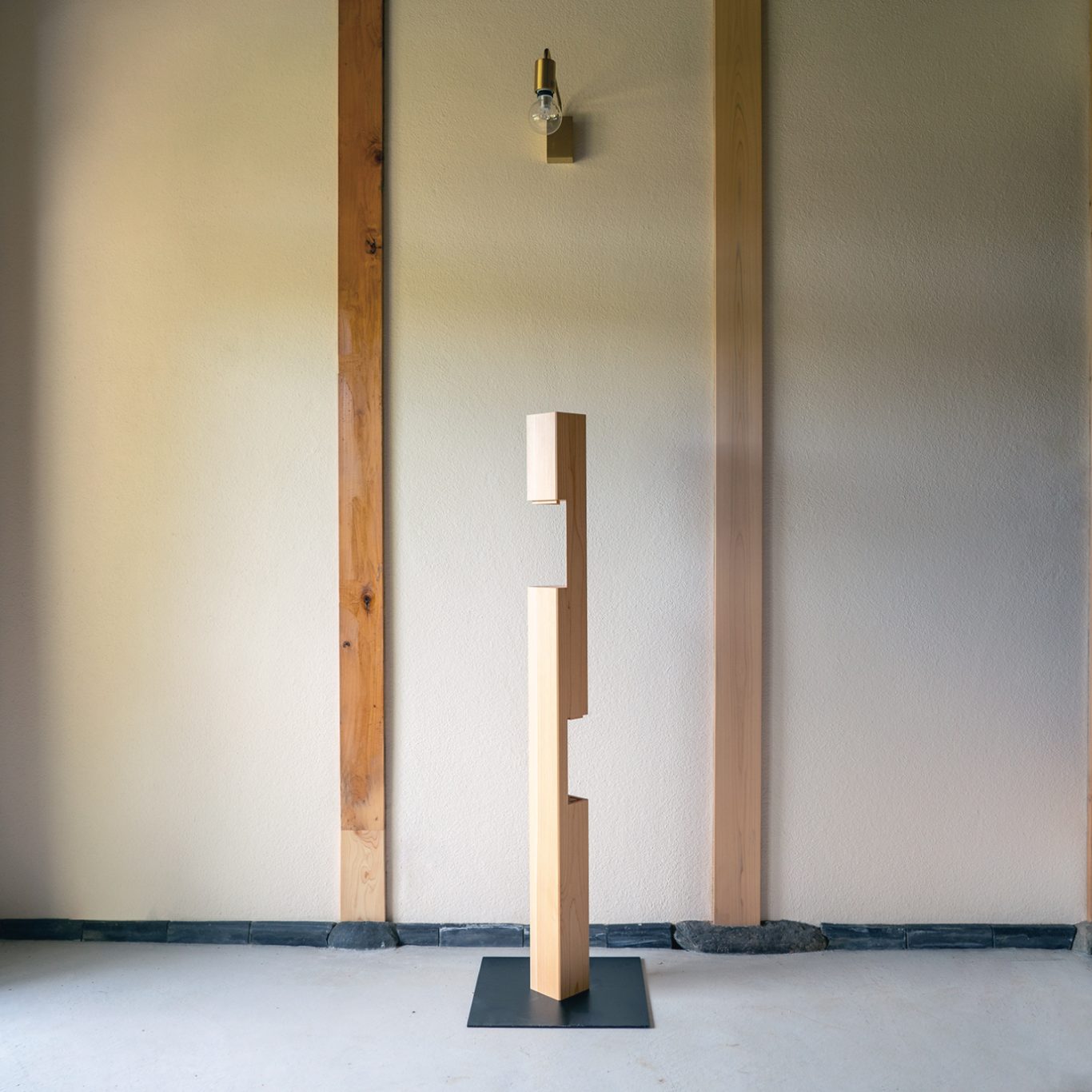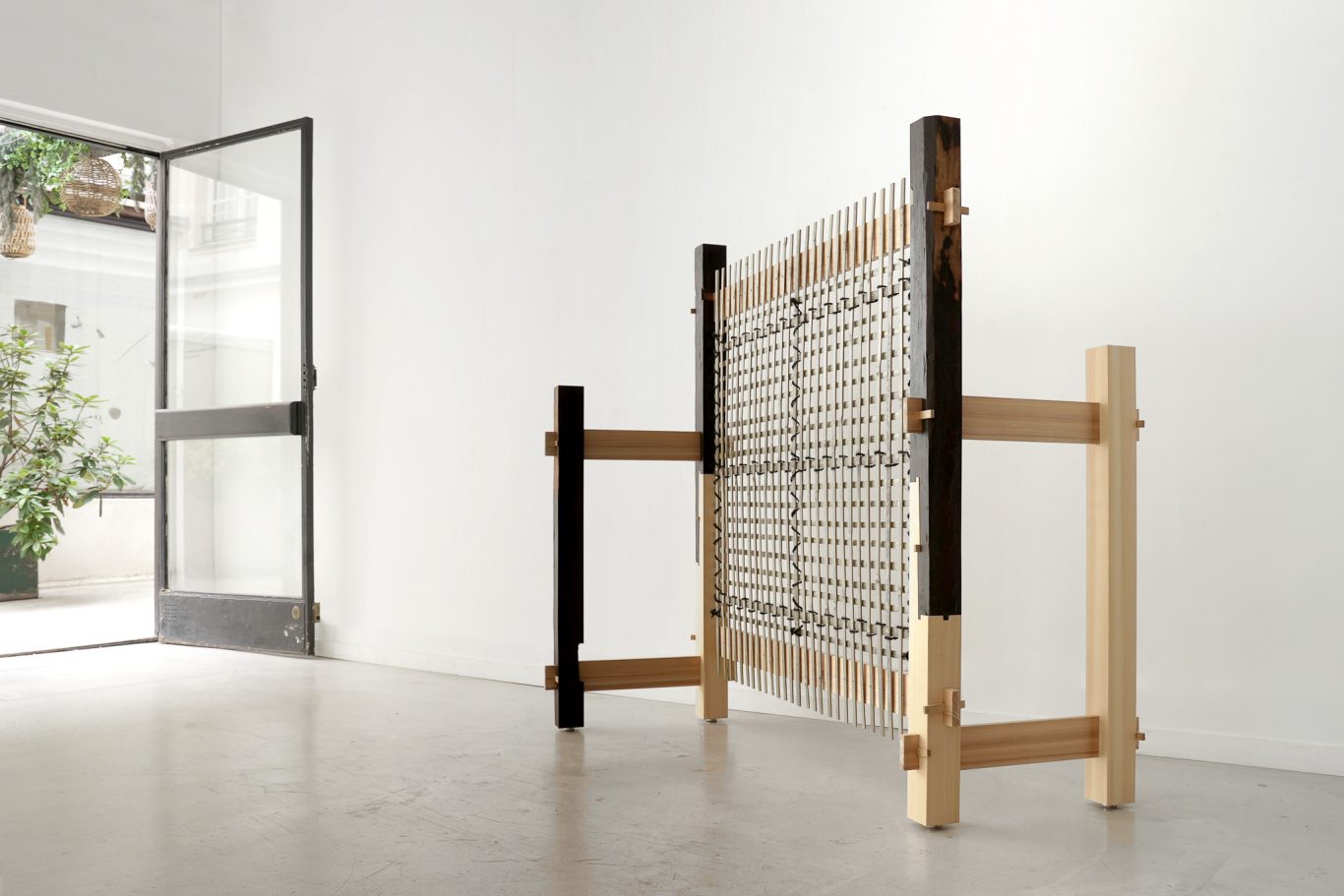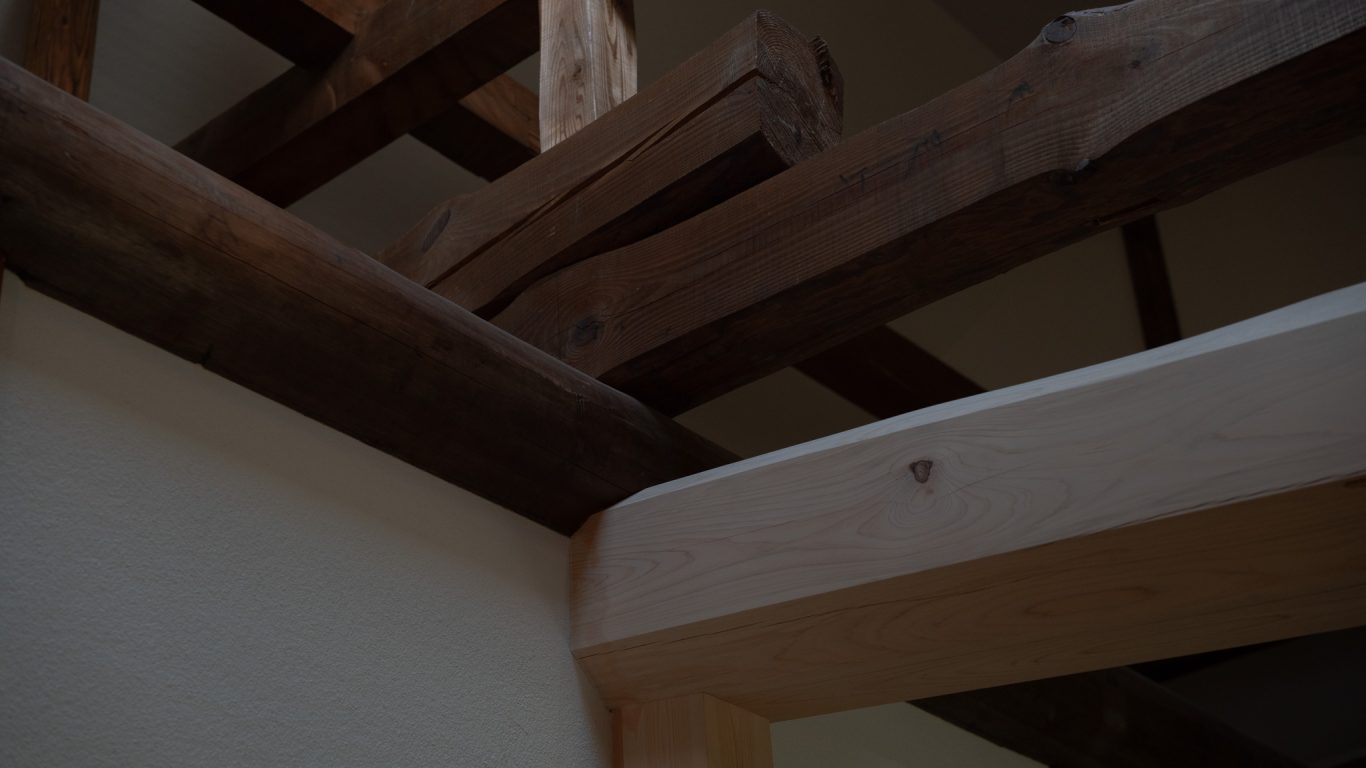
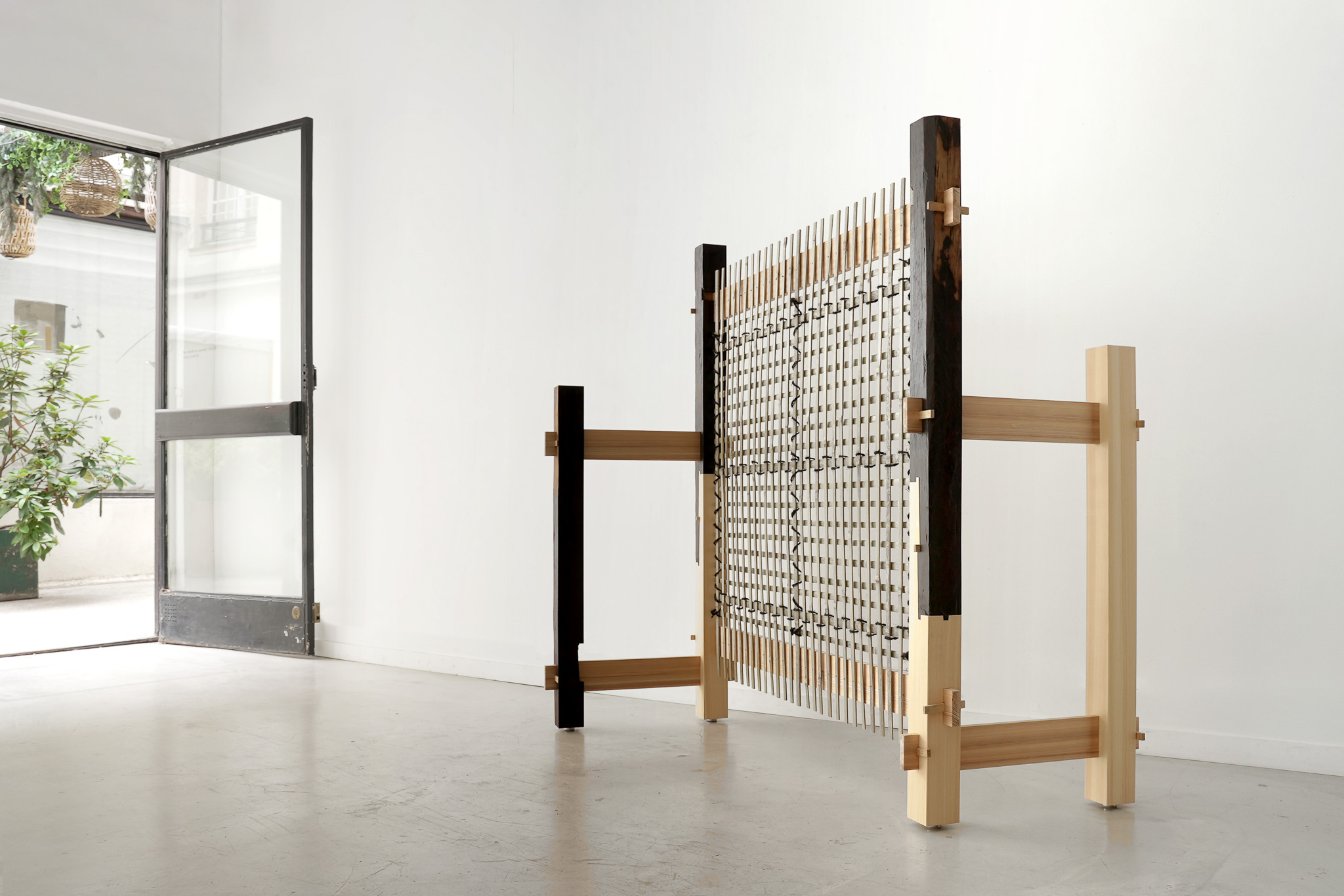
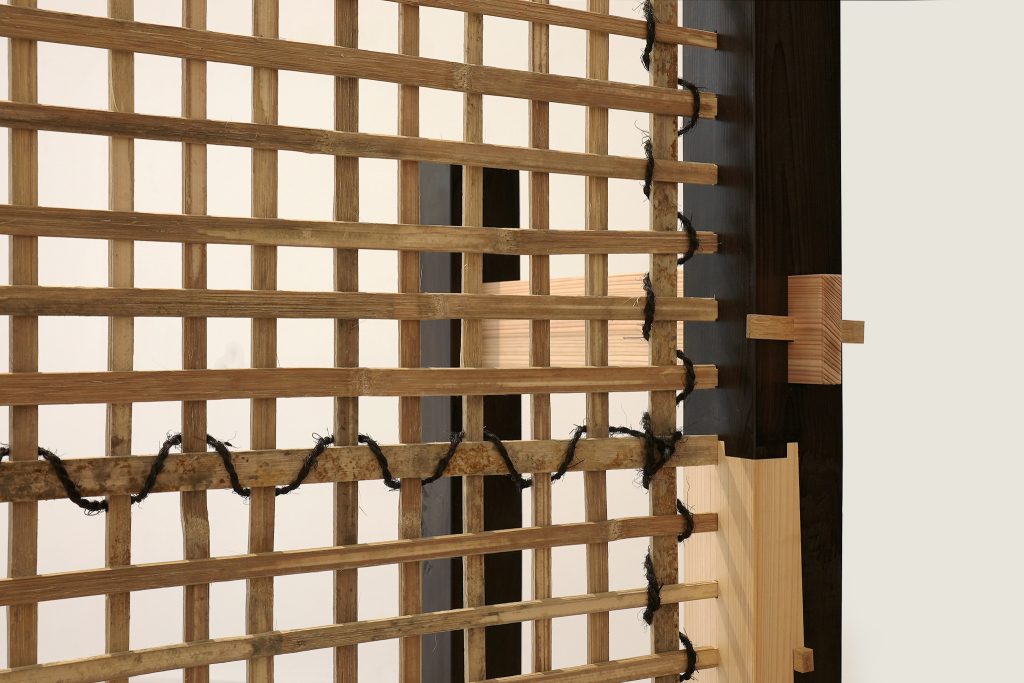
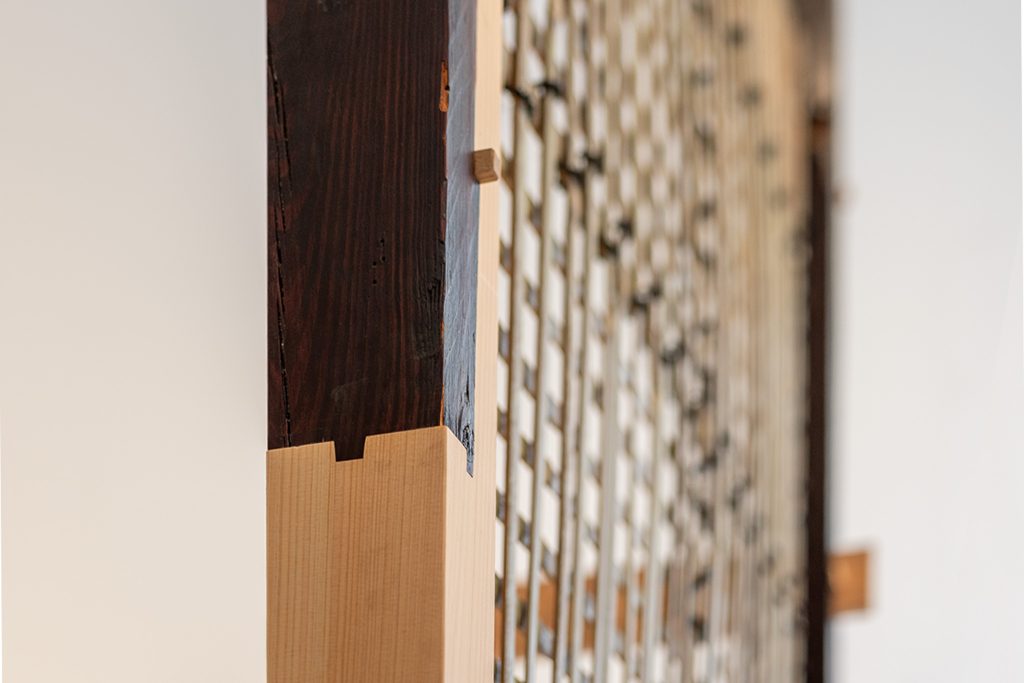
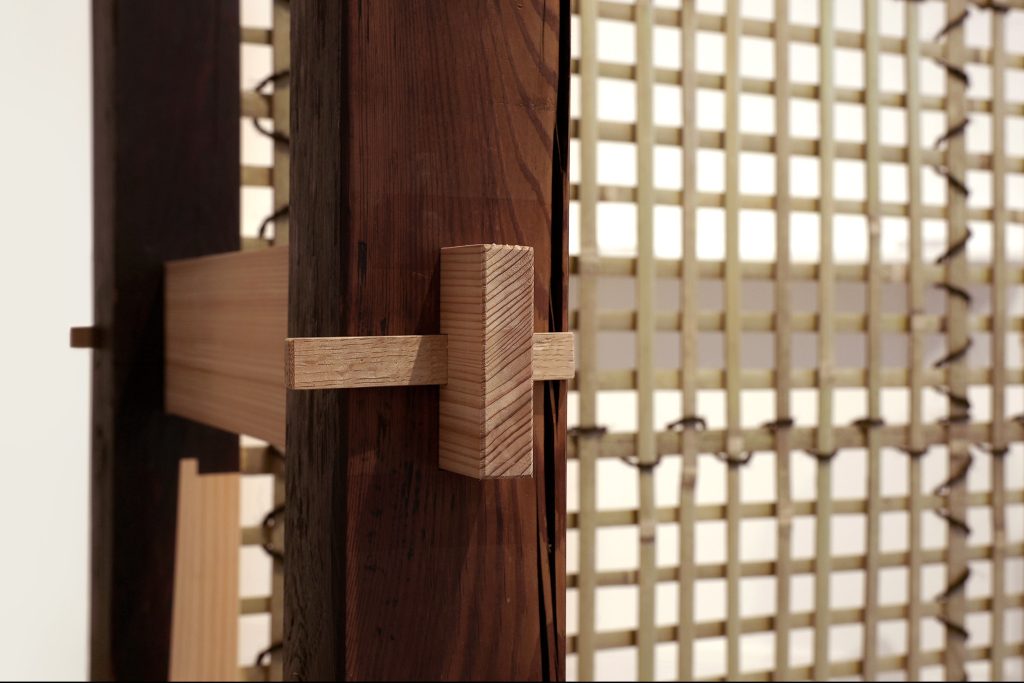
This folding screen-shaped three-dimensional work combines old and new Yoshino cedar while using the traditional “Kanawa-tsugi” or “Hanasen-Sashi” technique, which does not use nails or metal objects.
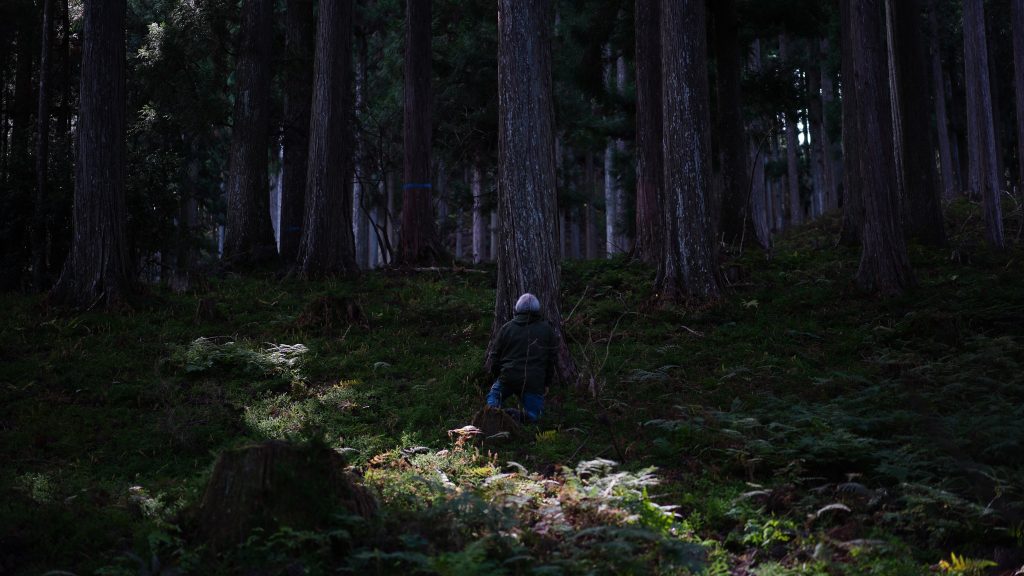
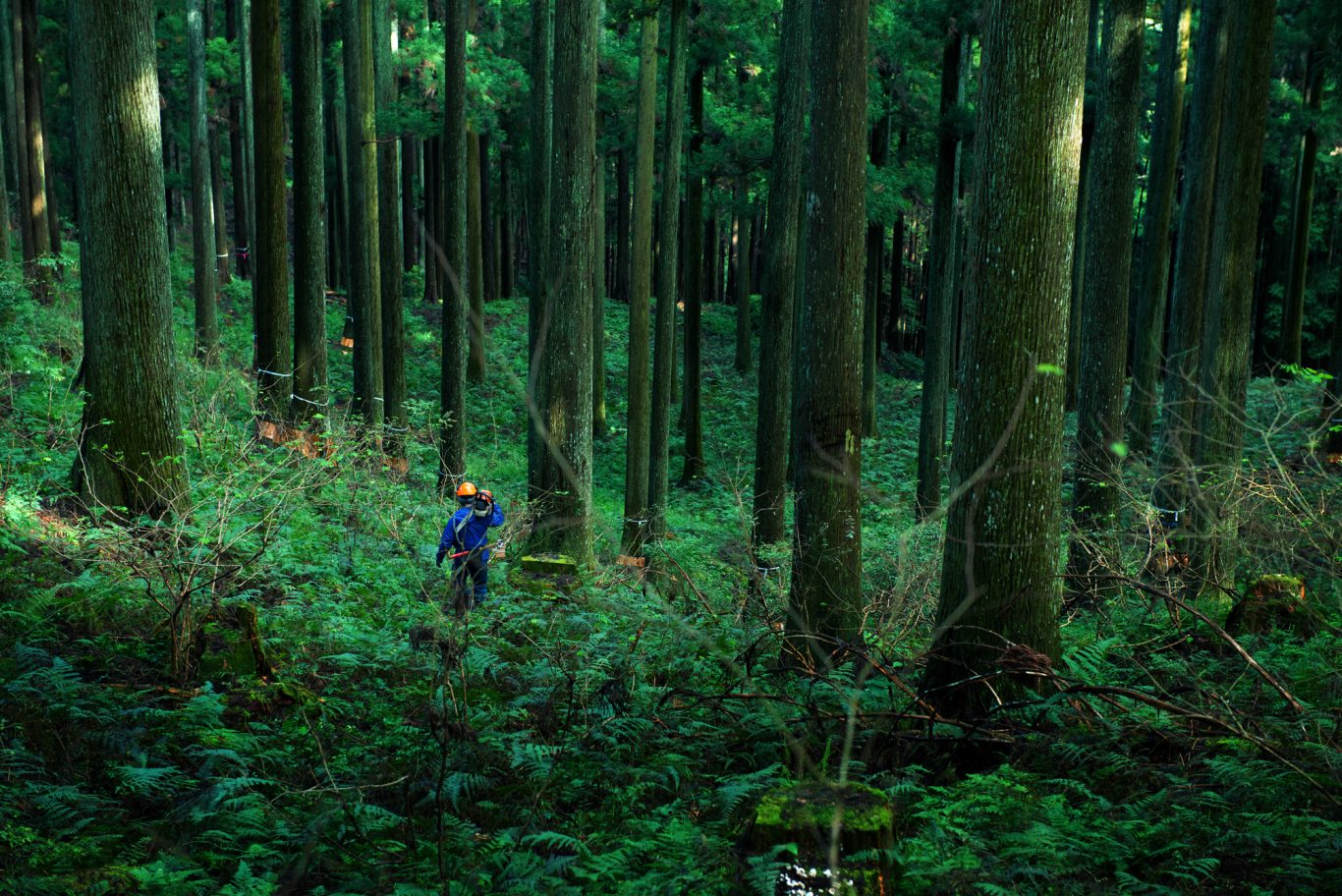
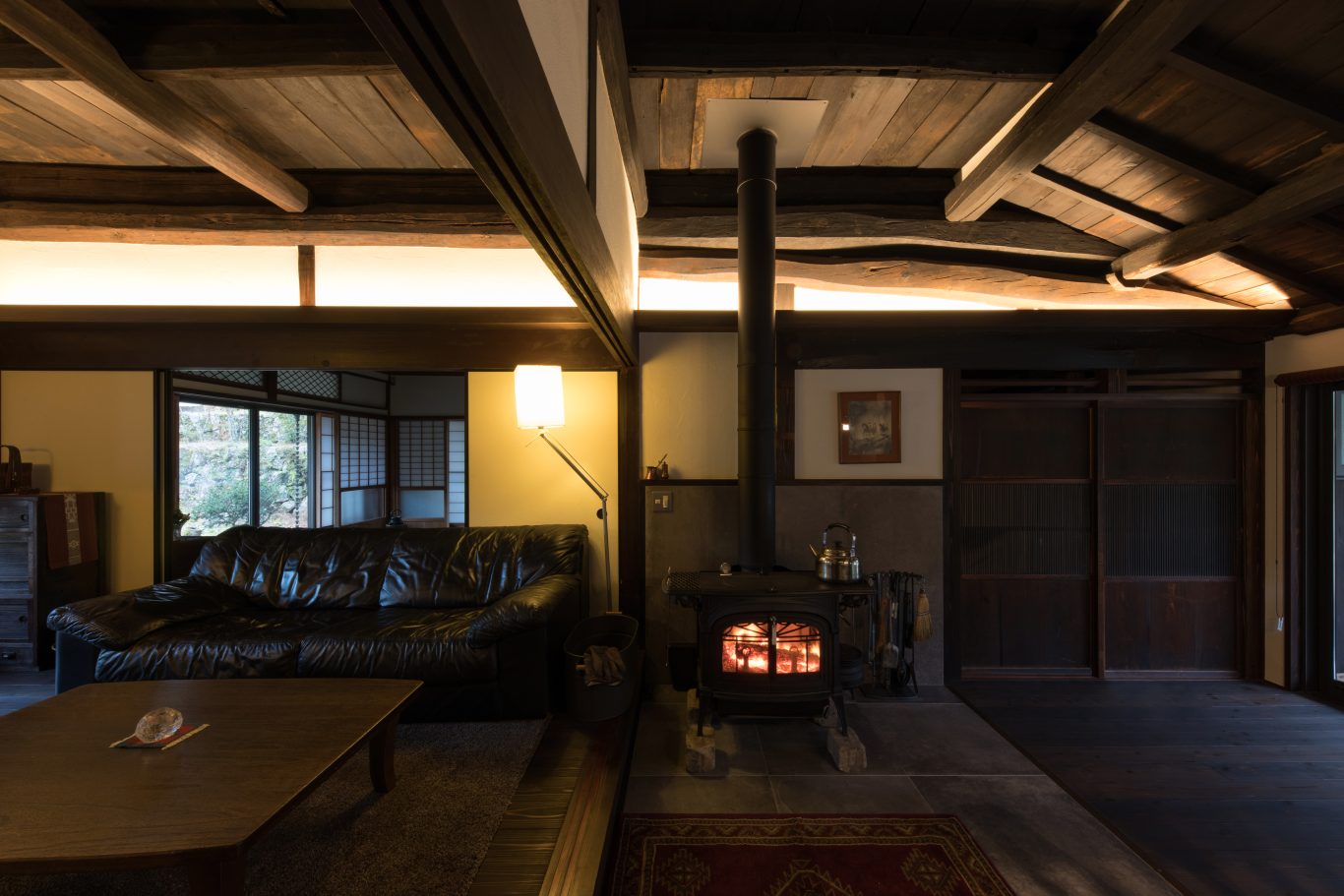
The old and new Yoshino cedar are combined to connect the past and present of the Yoshino forestry industry,which has continued for 500 years, and to present how the Yoshino cedar lives on while changing its form.
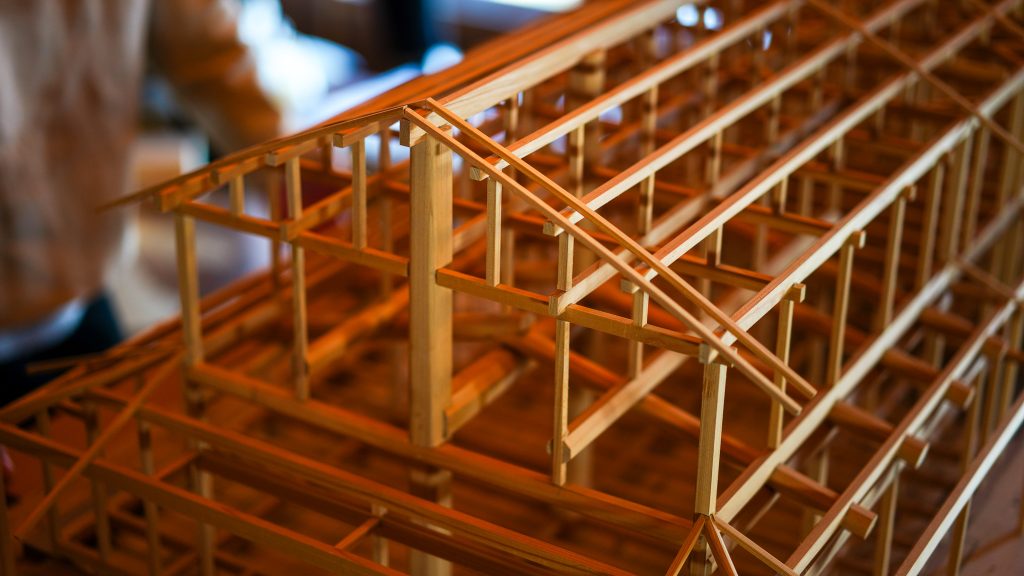
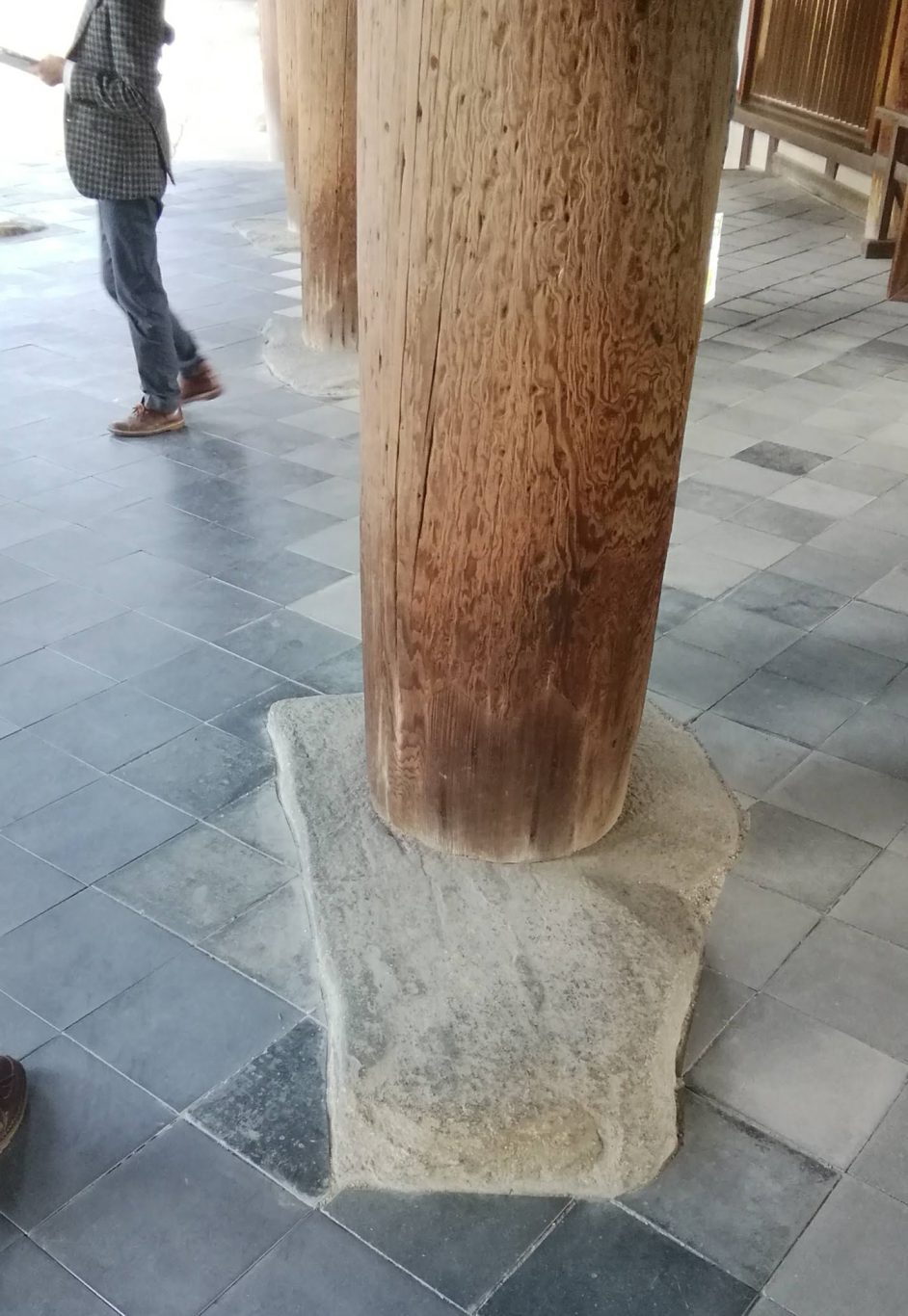
This work was produced in collaboration with Nara-based Architectural Studio Cochi, which specializes in the design and construction of traditional wooden structures.
size : 1300mm × 900mm × 1450mm
material : New and old Yoshino cedar, bamboo, and hemp cord
Collaboration work with Cochi / Photo: Cecile Loa
KEY WORD
Kanawa Tsugi: A Traditional Japanese Woodworking Joint Explained
Kanawa Tsugi is a traditional Japanese woodworking technique widely utilized in wooden architecture. This joint involves combining two identical wooden components by crafting T-shaped interlocking cuts and securing them with a locking peg. Known for its robustness and ability to withstand stress from all directions, Kanawa Tsugi is commonly employed to connect structural elements like columns, beams, and girders.