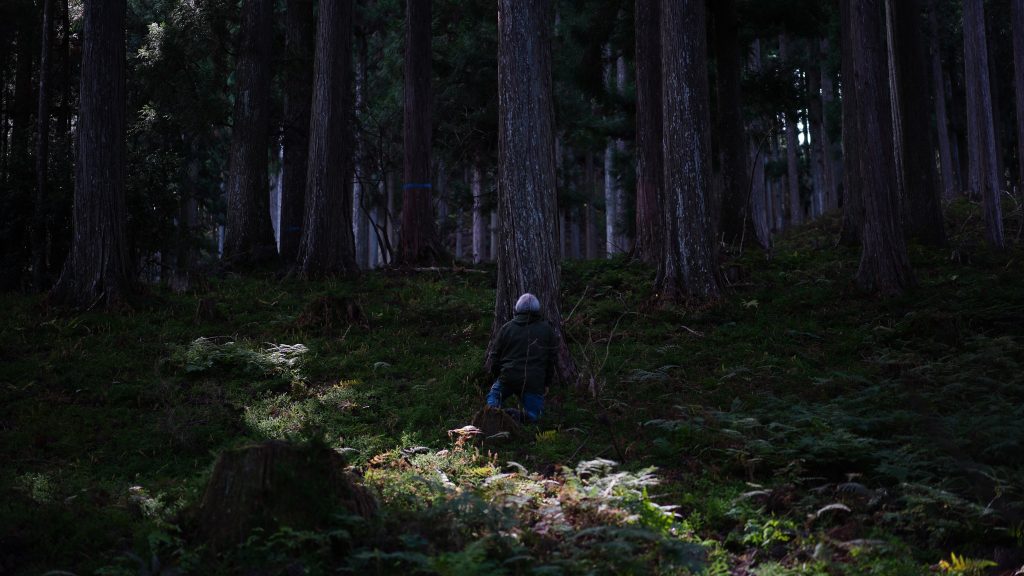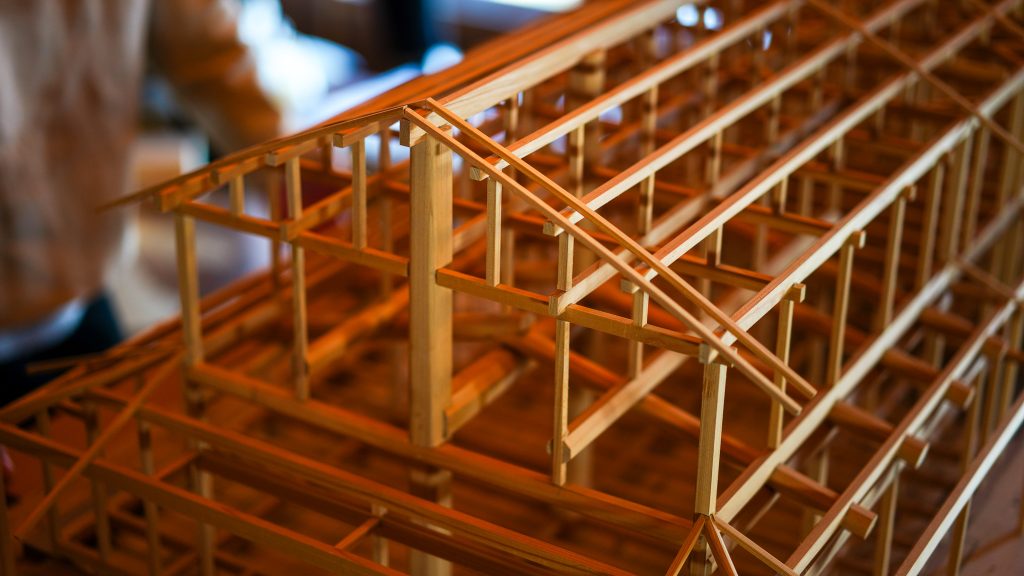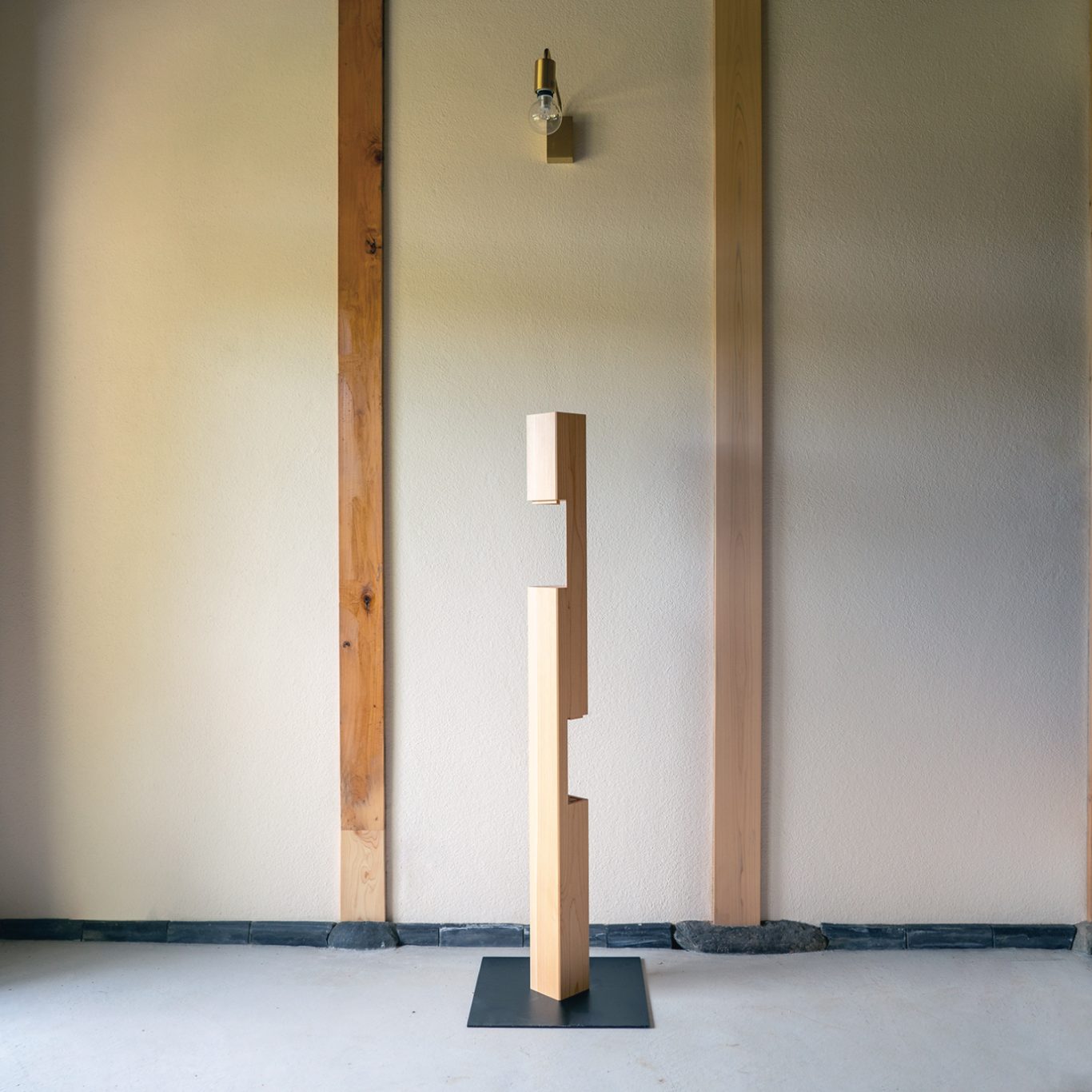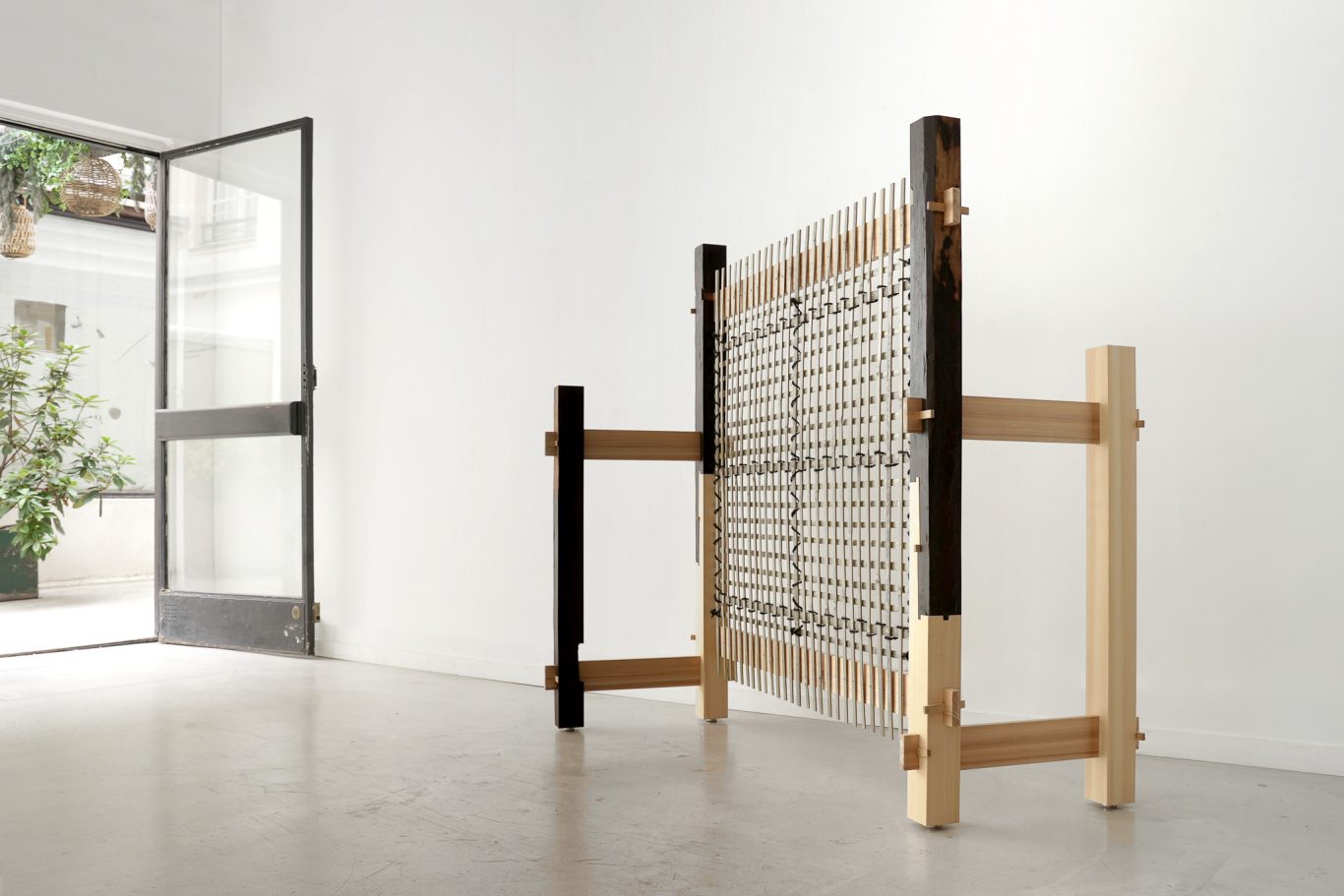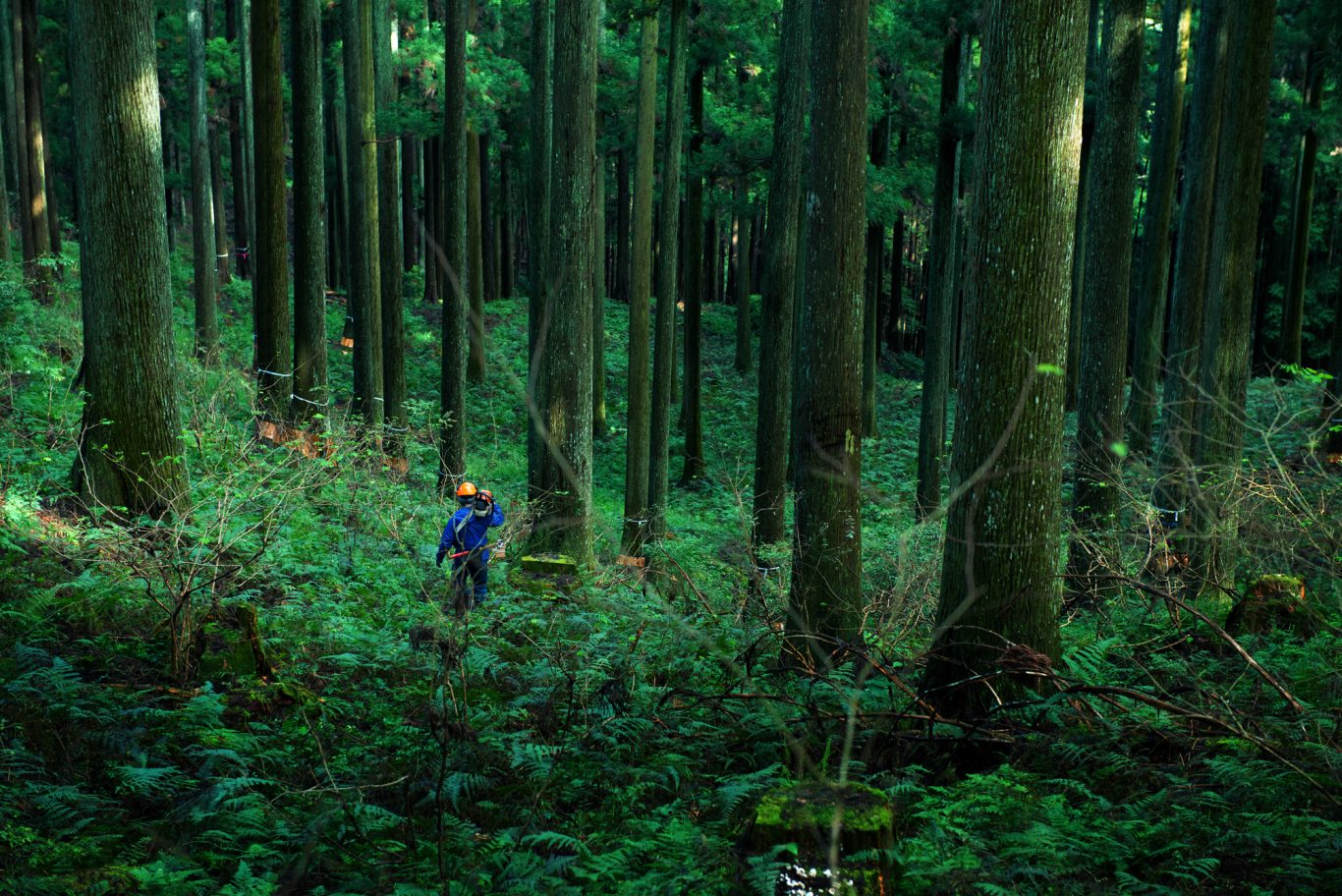
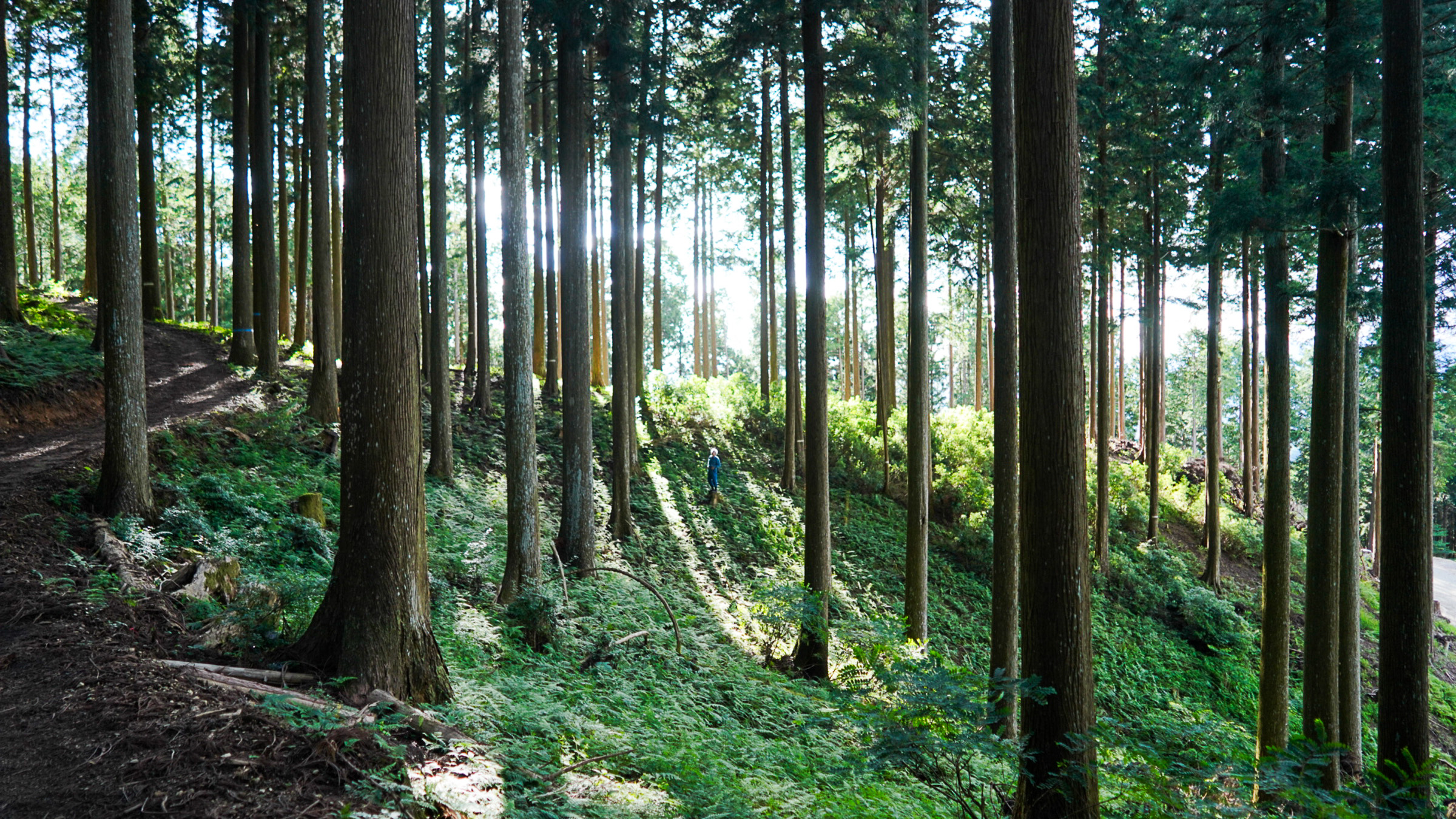
Yoshino Forestry, with over 500 years of history, is one of the world’s oldest forestry regions. In Yoshino, generations have coexisted with the mountains, dedicating lifetimes to nurturing a single tree for 200 or even 300 years. Central to this legacy are the “yamamori” (guardians of the forest), who act as stewards of this remarkable tradition.
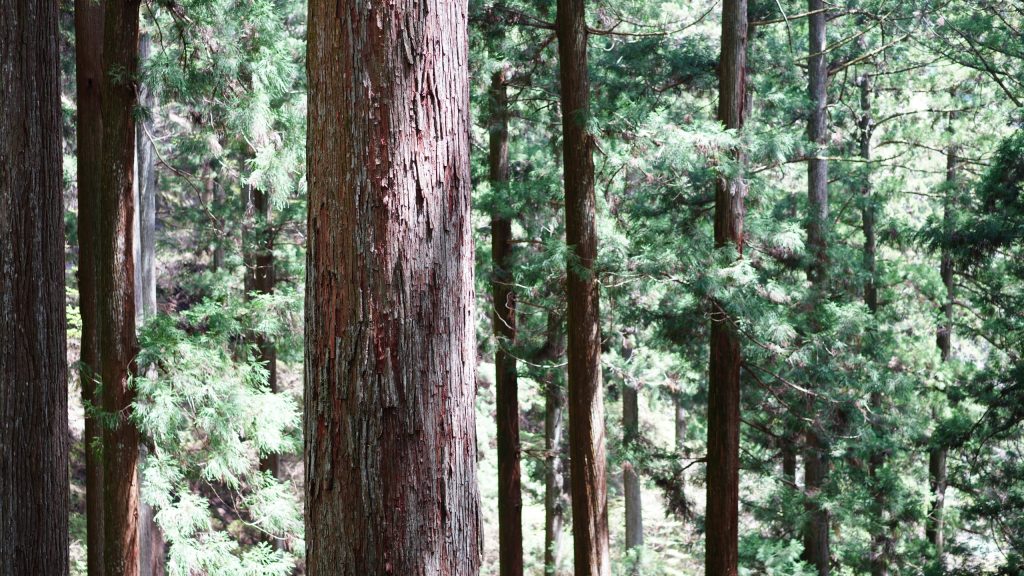
In the early 20th century, there were said to be over a thousand yamamori. Today, their numbers have dwindled significantly. Among them is Mr. Fukumoto, a highly skilled yamamori renowned for his expertise in felling giant trees aged 200 to 300 years or more. Such ancient trees are not easily cut down; it requires exceptional skill to fell them without damaging surrounding trees.
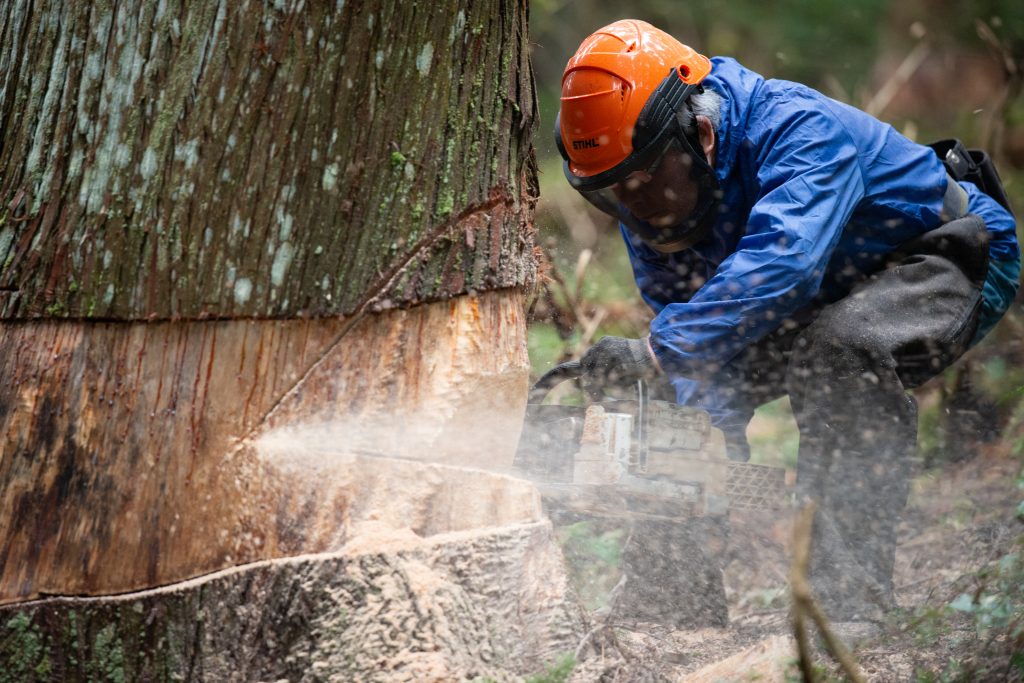
Moreover, each felling must consider the mountain’s wind patterns, ecological balance, and the forest’s appearance decades into the future. Selecting which tree to cut is an intricate decision rooted in long-term stewardship.
Mr. Fukumoto reflects on his craft:
"I understand the habits of the trees I cut down every day. Every tree is different. That is why if there are ten trees, they will be cut down in ten different ways. I look at the tree’s center of gravity, the tension in its branches, how twisted they are and at what angle it sits, and then I cut the tree down in a way that does not go against all of this. So a dialog with the tree means looking at the tree for a while then seeing how best to proceed, after which you can chop it down safely.
If the tree is 50 to 60 years-old, you can easily work with it, but if the tree is over 100 years-old then it is heavy and really big, so you cannot work against it to cut it down. You come of age when you are able to cut it by yourself. It is like anything else, if you try to go against it, it will not work."
The Legacy of Yoshino’s Yamamori
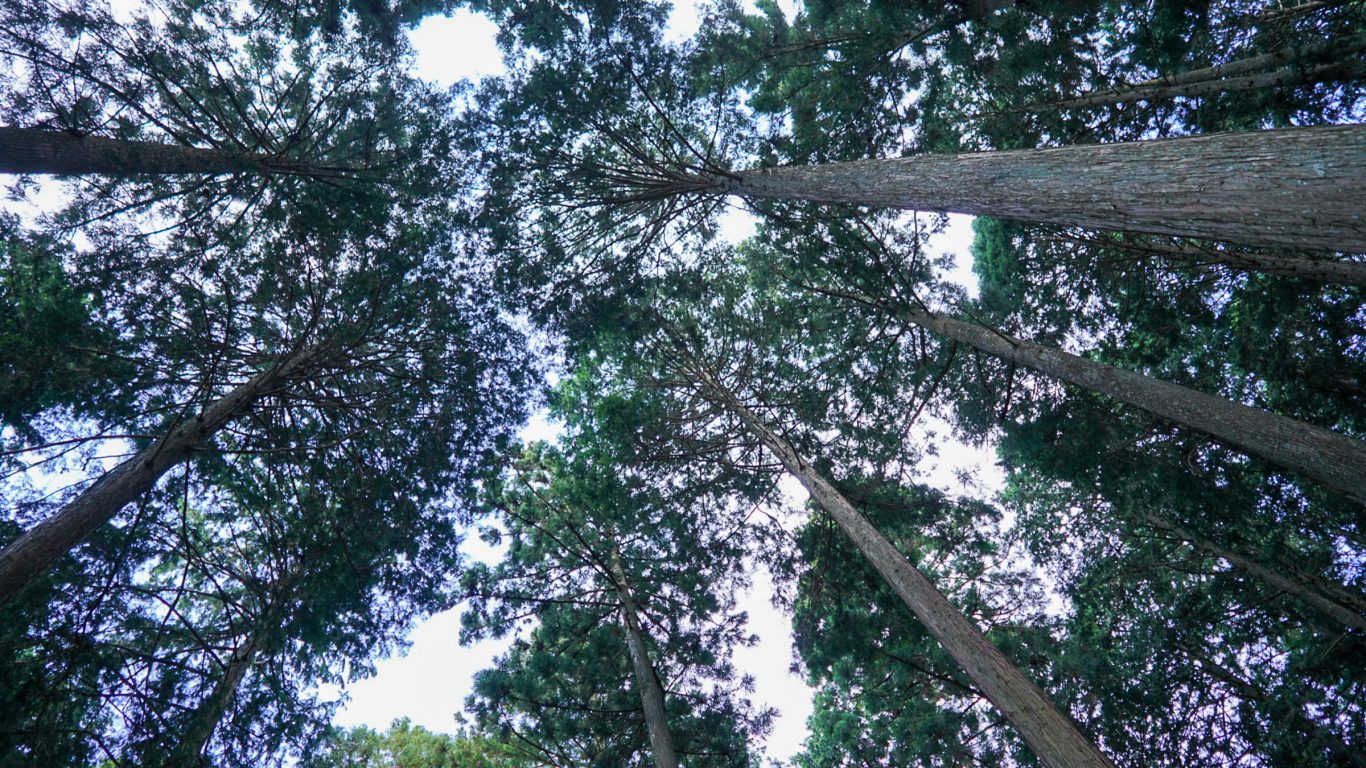
In typical forestry regions, planting densities range from 3,000 to 5,000 trees per hectare. In contrast, the yamamori (forest guardians) of Yoshino adopt an exceptionally dense planting method, cultivating 10,000 to 15,000 trees per hectare. This practice, known as “missyoku” , forms the cornerstone of Yoshino’s forestry techniques. Combined with multiple thinning cycles—conducted at far higher frequencies than in other regions and sustained over generations—this meticulous care produces Yoshino cedar renowned for its uniform growth rings, exceptional beauty, and remarkable strength.
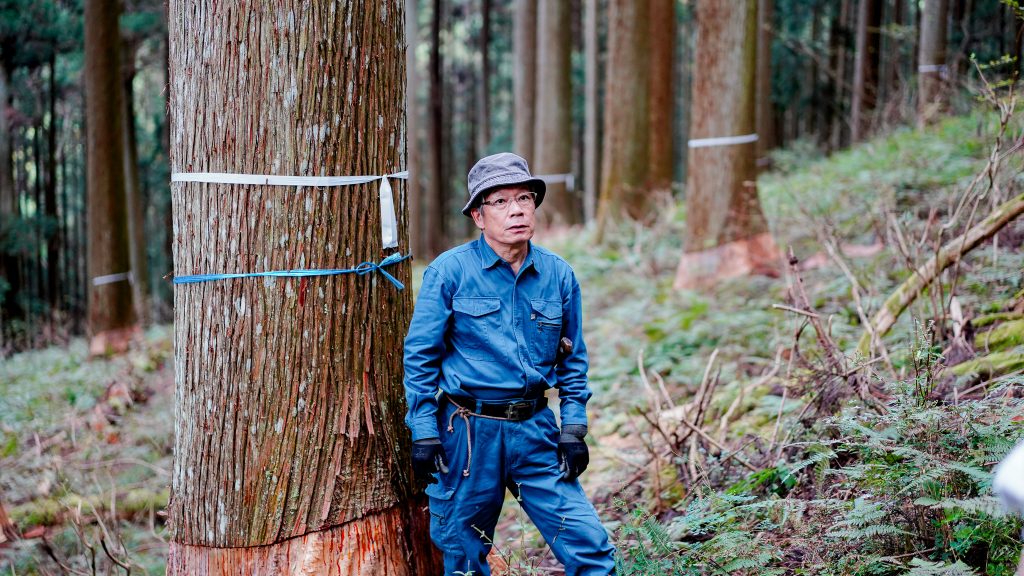
The origins of the yamamori system in Yoshino trace back to the early 1700s. The “Yoshino Forestry Compendium,” published in 1898 and considered foundational to Japan’s forestry practices, describes the system as follows:
To secure the value of mountain forests, a yamamori is assigned to each village or district to patrol, protect, and manage the forests. The yamamori ensures meticulous forest care, identifies the optimal timing for thinning, and prevents illegal logging. In the event of forest fires, they direct workers to contain and extinguish the flames to prevent major damage. For forests along roads, they create firebreaks to mitigate fire risks. Even when standing timber is sold, it is customary to retain the yamamori, who continues to oversee the forest on behalf of the new owner.
At the beginning of the 20th century, there were over 1,000 yamamori in Yoshino. Today, their numbers have dwindled alarmingly. In Kawakami Village, home to Japan’s oldest forestry traditions, fewer than 50 yamamori remain, reflecting the growing challenges of sustaining this time-honored practice.
Yoshino Forestry and the Reverence for Nature
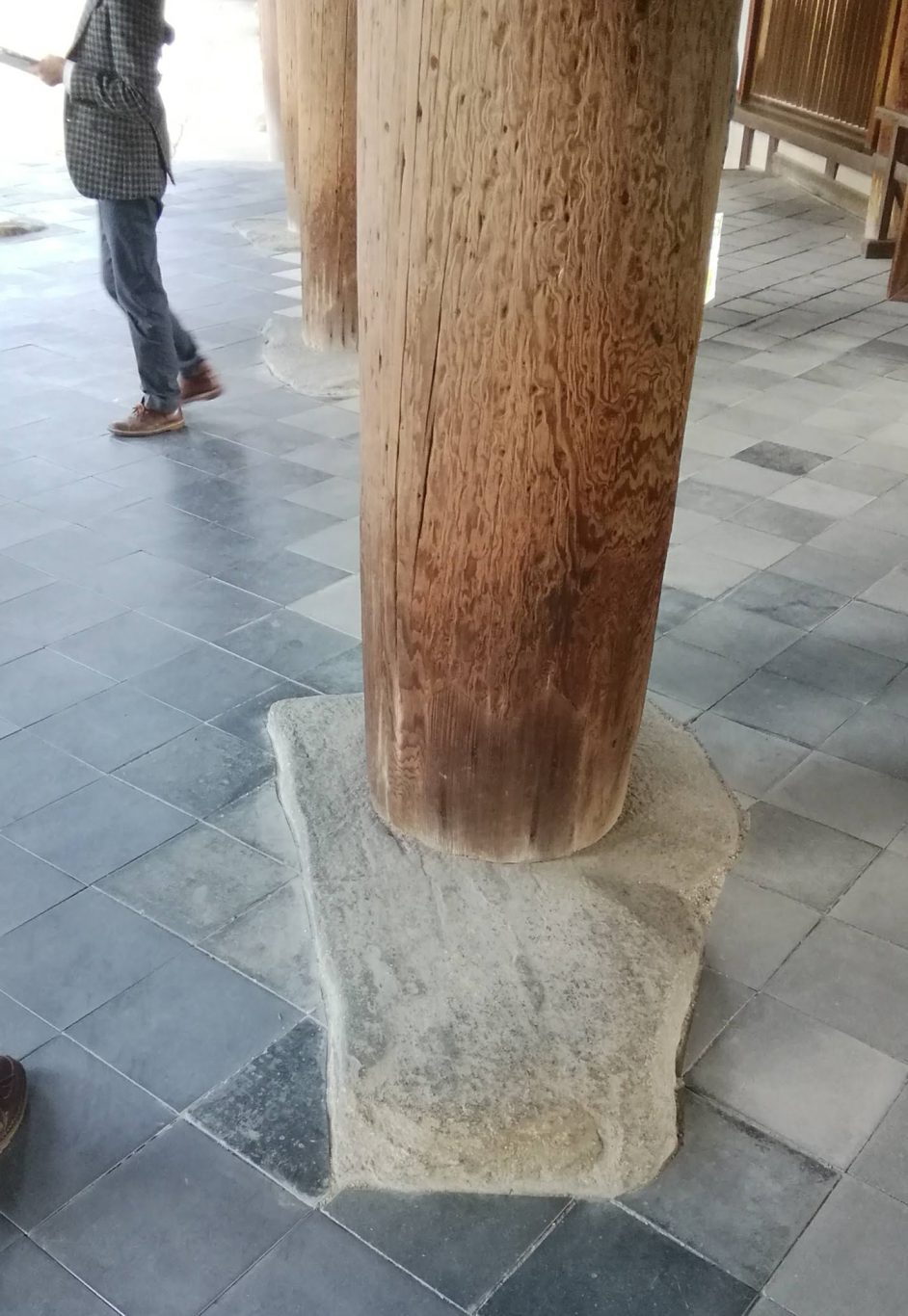
In most managed forestry regions, trees are typically harvested at around 60 to 80 years of age, as this is sufficient for constructing beams and pillars for homes. In Yoshino, however, select trees are deliberately left standing for over 100 or even 200 years to meet the specialized needs of temples, shrines, and other unique projects. This intentional cultivation of 200- to 300-year-old Yoshino cedar and cypress involves continuous thinning over centuries—a practice known as “Choukibatsu” .
Felling a tree over 200 years old is a profound experience, even for seasoned yamamori . Reflecting on his first encounter with a 280-year-old Yoshino cedar, Mr. Fukumoto shared:
"That was the first time I cut down a tree of about 280 years. I couldn't communicate with it, and I used force. The tree became angry. Although I intended for it to fall one way, it tilted the other. It was a dangerous moment. I prayed to the gods, and after two hours of struggle, the tree finally fell—a miraculous outcome."
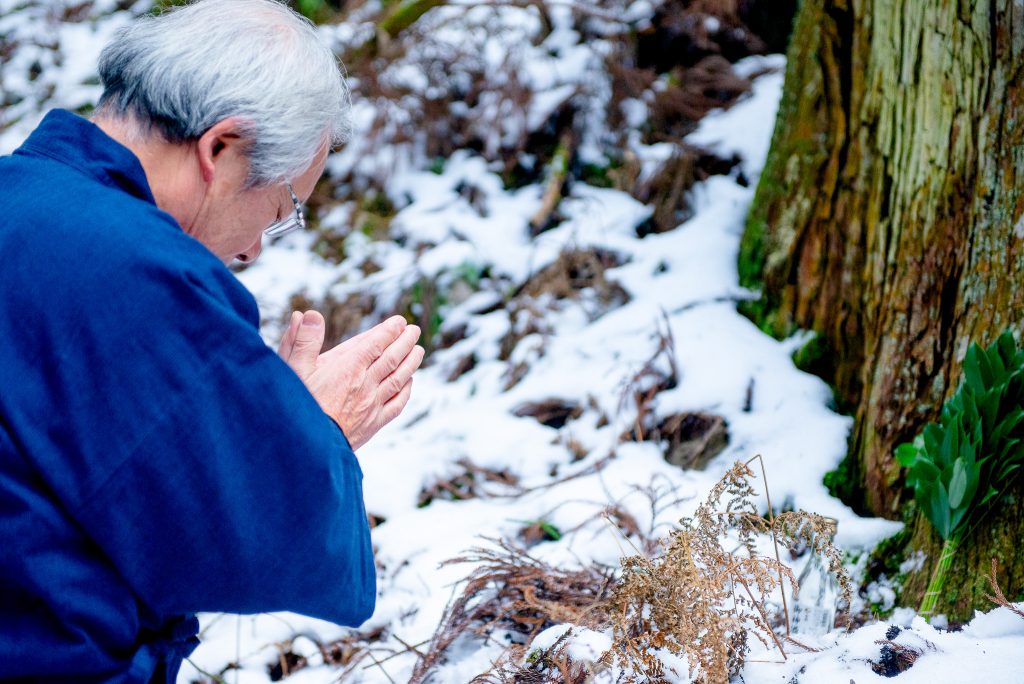
Before felling such a tree, Mr. Fukumoto purifies the area with sake, offers a sacred sakaki branch (a tree revered in Shinto rituals), and prays. He explains, “When cutting trees that have grown for more than 200 years, we believe the mountain gods dwell within them. Offering prayers helps to dispel the fear I feel beforehand. It allows me to proceed with a calm and respectful heart.”
These rituals embody gratitude—not only for safely felling the tree but also for the natural processes and generations of caretakers who nurtured it. Carrying forward the tradition of Yoshino forestry means inheriting not just its techniques and ecosystem management but also the spiritual and cultural values that define this ancient practice.